
5 Numbers That Will Define Hospitality in 2026
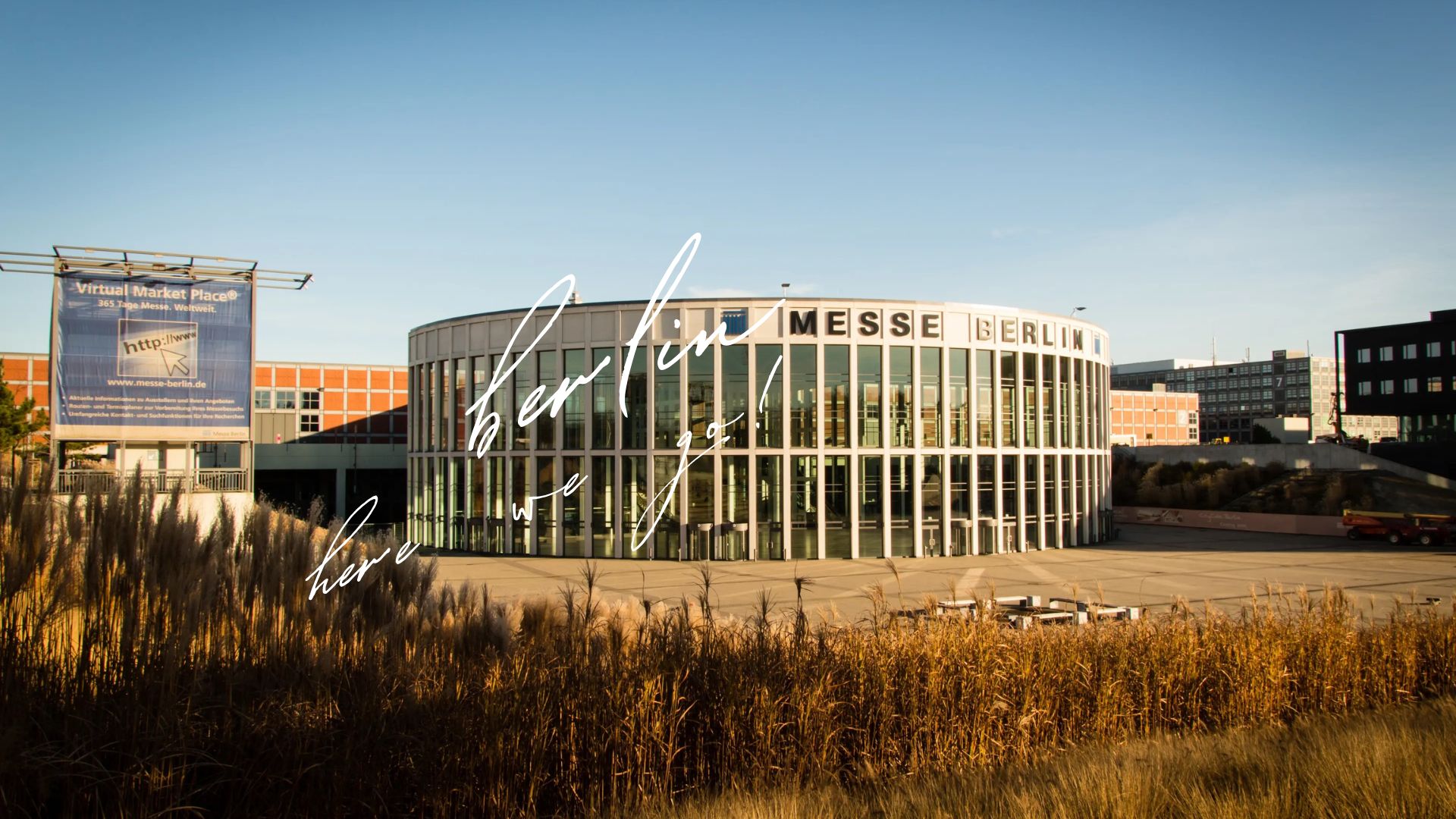
From 3–5 March 2026, the global travel industry will once again gather at ITB Berlin, hosted at Messe Berlin. As the sector’s largest annual meeting point, ITB has traditionally been a stage for announcements, partnerships, and ambitious forecasts. It has long symbolized momentum.
Yet 2026 carries a different undertone. While previous editions were defined by recovery narratives and demand rebounds, this year feels more reflective. The industry is no longer asking whether travel has returned — it clearly has. Instead, the more pressing question is how sustainably and intelligently it can operate in a normalized but more complex environment.
In that sense, ITB no longer simply promises inspiration; it demands interpretation. Behind the optimistic headlines lie structural realities: tighter margins, shifting distribution dynamics, shorter booking windows, and higher operational costs. Growth is no longer enough. Discipline, clarity, and strategic balance have become the defining characteristics of mature hospitality businesses.
This is why 2026 should not be framed as another growth year, but as a year of structural maturity. The emergency phase is now over, the acceleration phase has stabilized. What remains? The work of refinement — recalibrating revenue models, strengthening brand positioning, and aligning technology with operational intelligence.
Against this backdrop, five numbers stand out. They do not merely describe the current state of travel; they reveal deeper signals about where hospitality leadership must focus next.
€1.5 Trillion — The Global Tourism Economy Is Back
International tourism revenues have largely returned to — and in several regions surpassed — pre-2020 levels, contributing approximately €1.5 trillion globally. The industry has volume again. But volume is not victory.
The return of global spending does not automatically translate into healthier balance sheets. What the upcoming ITB Berlin could make evident is that top-line recovery is masking operational fragility in many properties, reframing the real question from “does tourism back?” to whether its profitability models have evolved with it.
Hotels that adjusted cost structures, distribution mix, and direct booking ratios during the volatile years are entering 2026 stronger, while those who relied purely on returning demand are facing margin compression.
20–25% — The Average Share of Direct Bookings for Independent Hotels
Across Europe, independent hotels generate on average between 20% and 25% of their total revenue through direct channels. In practical terms, this means that 75% or more of bookings often flow through intermediaries — primarily OTAs and other third-party distribution partners.
Distribution itself is not the problem. OTAs provide reach, liquidity, and demand stability. They are embedded in the modern travel ecosystem and will remain so. The strategic risk lies not in partnership, but in imbalance. When too much revenue depends on external channels, pricing power, margin control, and customer ownership gradually weaken.
This is why the distribution discussion in 2026 feels more pragmatic than ideological. The question is no longer whether hotels should prioritize direct bookings — that is broadly accepted. The more relevant questions are structural:
- How resilient is your revenue model if commission structures tighten or advertising costs increase?
- How effectively does your CRM convert first-time guests into repeat customers?
- What proportion of your marketing investment builds owned audience equity, and what portion simply rents visibility for immediate performance?
Recalibrating distribution is not about replacing one channel with another. It is about restoring equilibrium between scale and control. Hotels that manage this balance well are not necessarily the loudest in the market — but they tend to be the most financially stable over time.
30–40 Days — The Shrinking Booking Window
Booking windows across many European markets continue to sit below pre-pandemic norms, frequently averaging 30–40 days for leisure travel. While demand remains present, the timing of that demand has shifted. Travelers are committing later, comparing more options, and reacting to pricing and policy changes in real time.
That means that we are dealing with shorter booking windows. Shorter booking windows inevitably introduce volatility. Forecasting becomes less predictable, marketing calendars lose rigidity, and revenue pacing requires closer monitoring. However, volatility in itself is not negative. It simply changes the rules of engagement.
In this environment, agility becomes a genuine competitive advantage. Hotels can no longer rely on long forecasting horizons or rigid seasonal strategies. As a result, marketing campaigns must be designed with flexibility in mind — modular, adaptable, and easy to deploy as conditions evolve. Pricing strategies also need to adjust dynamically rather than respond after the fact, while data interpretation has shifted from quarterly reviews to a much more frequent rhythm, often requiring weekly or even daily analysis.
Discussions around AI-driven revenue management and predictive analytics have understandably dominated many panels of experts. Yet the presence of advanced tools does not automatically create advantage. The strategic edge lies in leadership response time — how quickly teams interpret signals, align internally, and execute adjustments without operational friction.
Shorter booking windows are not a structural threat. They are a stress test. And like any stress test, they reveal which organizations have built operational reflex — and which are still relying on stability that no longer exists.
8–12% — The Rise in Operational Costs Across Europe
Energy prices, labor shortages, and supply chain pressures continue to weigh on hotel profitability across Europe, with many operators reporting operational cost increases in the high single digits on an annual basis. While revenue in several markets has recovered or even surpassed pre-pandemic levels, expense structures have not returned to earlier norms. In many cases, they have permanently shifted upward.
This reality fundamentally changes the conversation. The period when rising demand could quietly absorb operational inefficiencies has come to an end. Growth on its own is no longer enough to protect margins. What could once be offset by higher occupancy or stronger ADR now requires far closer attention to operational discipline, cost structure, and the overall efficiency of the business.
Cost discipline, therefore, is no longer a defensive posture. It is a strategic one. Hotels that track cost per acquisition, understand performance by channel, and calculate lifetime guest value with clarity are structurally stronger than those focusing exclusively on RevPAR. Revenue without context can create the illusion of performance; revenue aligned with margin creates resilience.
70%+ — Guests Expect Personalization, But Few Hotels Deliver It Meaningfully
Research across multiple travel studies indicates that more than 70% of travelers expect some form of personalized experience when engaging with a hotel brand. Guests increasingly assume that properties will remember preferences, anticipate needs, and tailor communication accordingly. Personalization is no longer perceived as a premium feature; it is becoming a baseline expectation.
In practice, however, personalization often remains superficial. Automated pre-arrival emails, birthday discounts, or segmented promotional campaigns are frequently labeled as “personalized,” even though they rely on limited behavioral depth. While these tools have value, they rarely translate into a genuinely differentiated guest experience.
Meaningful personalization requires structural alignment. It begins with data clarity — clean, centralized, and actionable information about guest behavior. It extends to operational integration, where marketing insights are connected to front-office execution and on-property service. And it depends on brand coherence, ensuring that personalization enhances identity rather than fragmenting it across disconnected touchpoints.
Technology is not the limiting factor. Most hotels today have access to CRM systems, automation tools, and AI-powered platforms. The challenge lies in discipline — defining how data flows across departments, how insights inform decisions, and how personalization aligns with positioning.
Why ITB Berlin 2026 Matters More Than Usual
The hospitality sector has clearly moved beyond its emergency phase. The urgency that defined the pandemic years — liquidity protection, survival strategies, rapid tactical pivots — has largely subsided. Demand has returned, operational rhythms have stabilized, and long-term planning has re-entered boardroom conversations.
What lies ahead, however, is unlikely to resemble explosive expansion. Instead, the industry appears to be entering a period of selective and strategic evolution. Growth will continue, but it will be uneven. Capital will flow, but more cautiously. Decisions will be measured not only by potential upside, but by structural resilience.
ITB Berlin, held annually at Messe Berlin, remains the largest global meeting point for travel professionals. Its scale is impressive, and its visibility unmatched. Yet in 2026, its real significance does not lie in product launches or promotional showcases. It lies in recalibration.
Recalibrating distribution mix to protect margins.
Recalibrating profitability expectations in a higher-cost environment.
Recalibrating brand positioning in a more discerning market.
Recalibrating operational structures to support agility and data-driven execution.
These are not cosmetic adjustments. They are foundational ones.
Berlin’s own history offers a subtle parallel. Over the past century, the city has undergone multiple phases of transformation — political, economic, cultural. Its progress did not come from surface-level enhancements, but from structural reinvention. The hospitality sector now stands at a comparable inflection point. The question is no longer how quickly it can grow, but how intelligently it can rebuild its foundations for the next cycle.
North at ITB 2026
North will attend ITB Berlin from 3–5 March not to collect trend headlines, but to examine structural direction:
- Where investment is moving.
- How independent hotels are protecting margin.
- How loyalty models are evolving beyond discounts.
- How technology is being integrated into real operations — not marketing narratives.
We believe 2026 will not reward volume for its own sake. It will reward structure.
This is unlikely to be the year of “more” — more expansion, more visibility, more surface-level momentum. It is shaping up to be the year of “better structured”: clearer positioning, disciplined distribution, intentional growth, and internal alignment that holds under pressure.
The hotels that lead the next cycle will not necessarily be the ones moving fastest. They will be the ones where data, brand, and distribution operate as one system rather than three parallel conversations. Where commercial strategy is not reactive, but designed. Where growth is the result of coherence, not coincidence.
ITB Berlin is simply where many of these discussions intersect.
What ultimately matters is what happens next — when signals are filtered, priorities are chosen, and structure replaces noise.